
With the important objective of institutional development of provincial and local governments, and enhancing the capacity of officials and public employees to support their growth and development, thereby enabling effective service delivery, the Sudurpashchim Province Research and Training Academy was established in 2020 (2077 B.S.) through an act passed by the Sudurpashchim Provincial Government. The act was amended for the first time in 2022 (2079 B.S.), and immediately thereafter, the provincial government issued regulations in the same year. Since then, the Academy has been conducting its activities accordingly.
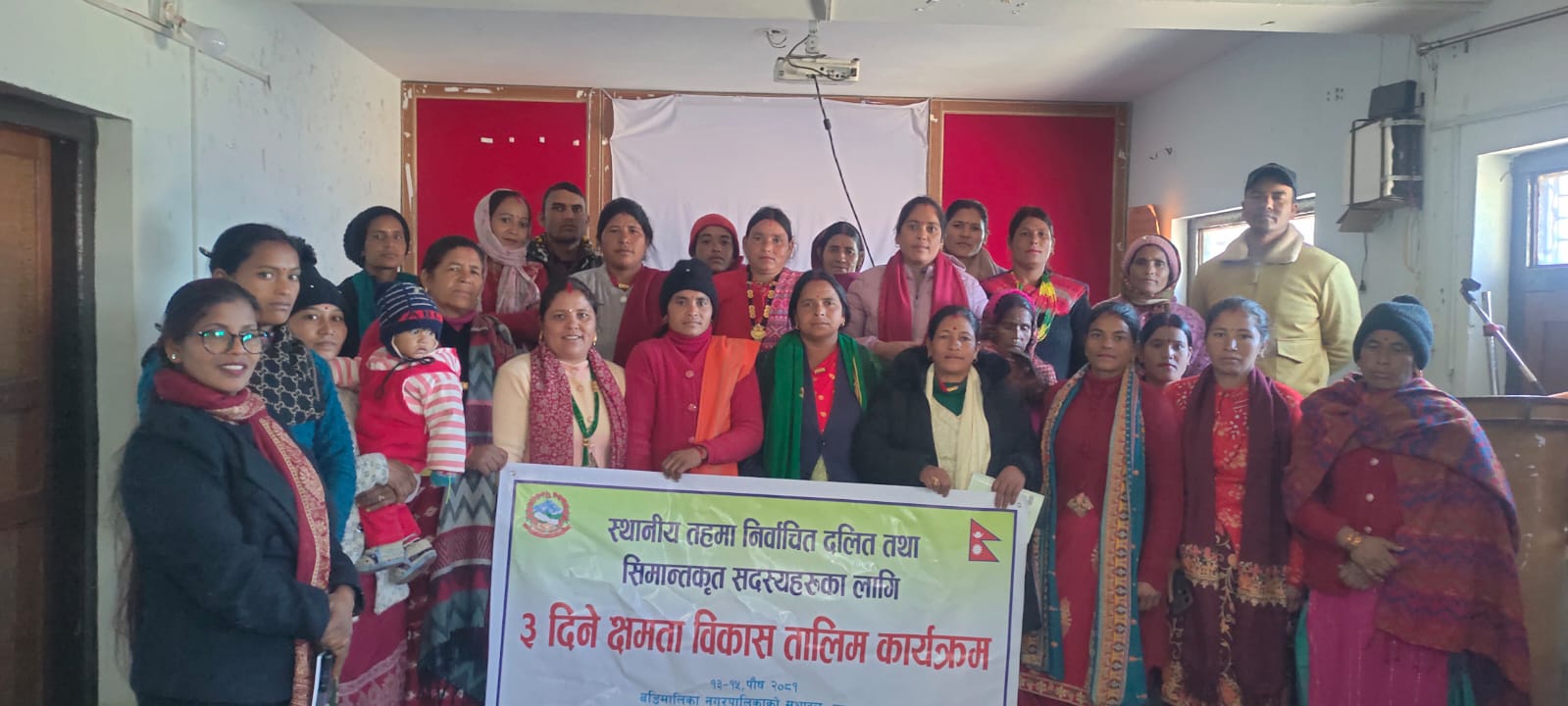
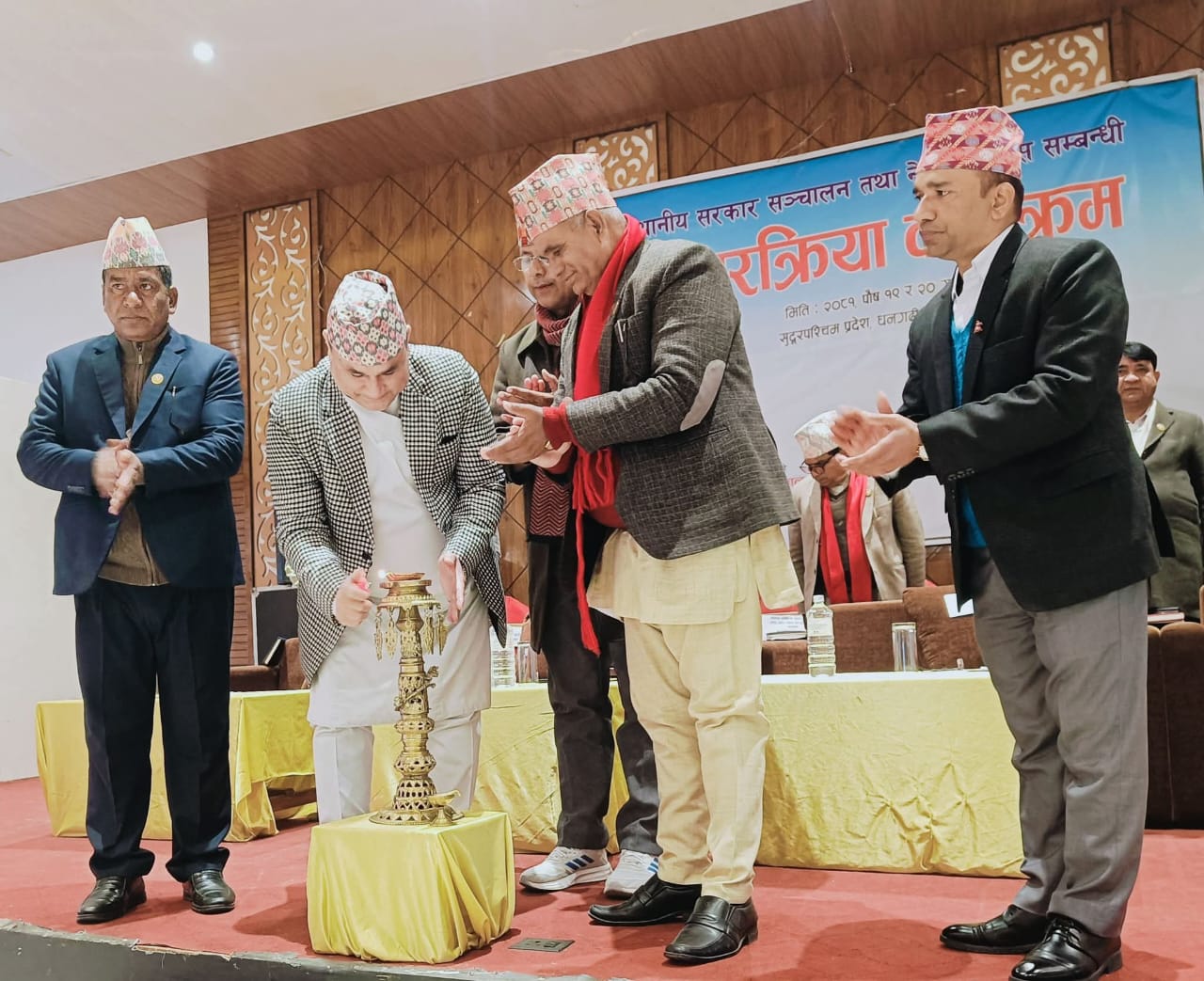
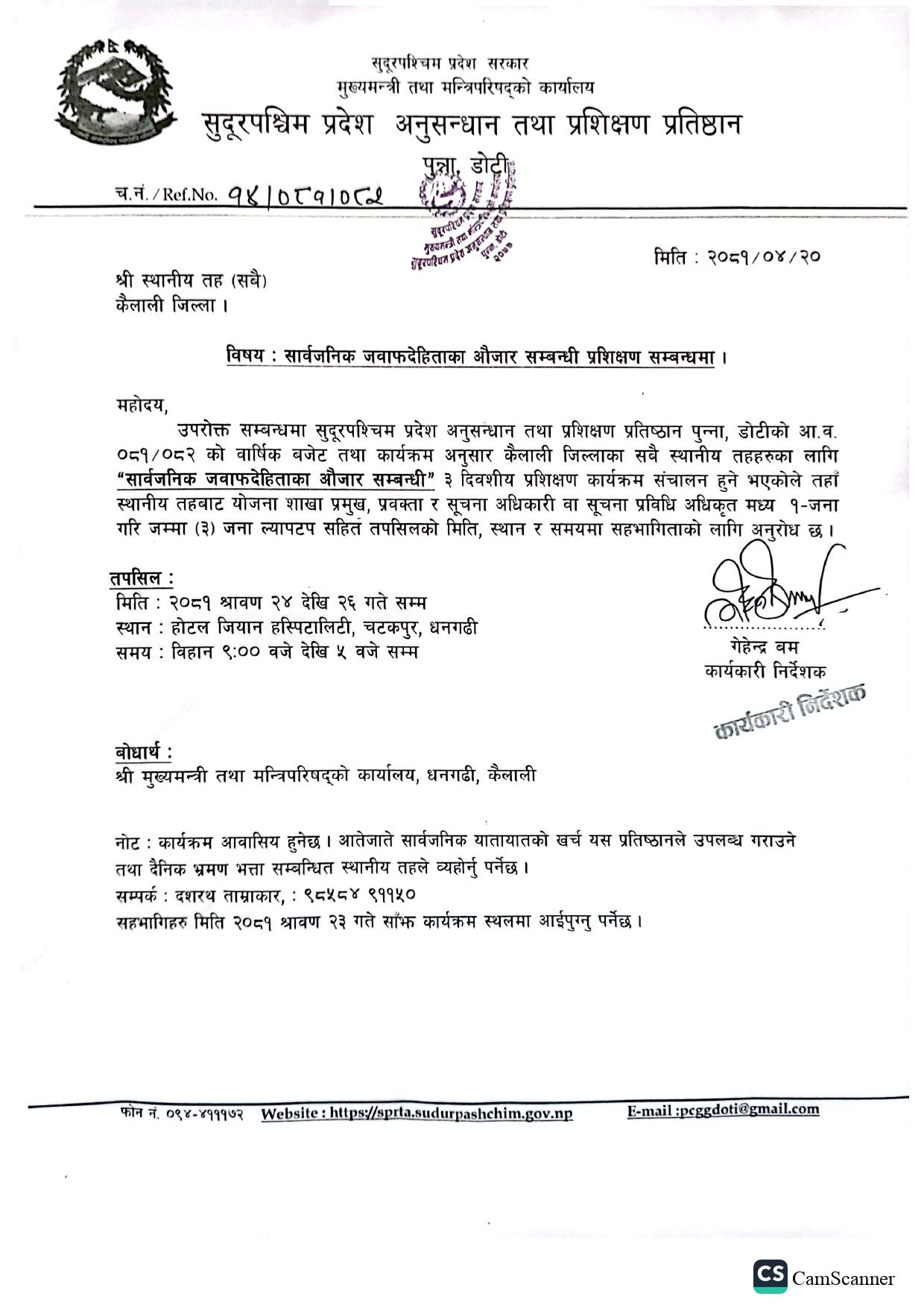
From its inception, the Sudurpashchim Province Research and Training Academy, located in Dipayal-Silgadhi, Doti, has played a significant role in enhancing the capacity of both provincial and local governments. The Academy has been conducting various programs and activities aimed at strengthening the managerial, legal, and administrative capacities of these levels of government, with the expectation of contributing to the development of prosperous and accountable provincial and local governments.
Based on the needs of both levels of government, the Academy has also been collaborating with universities and other institutions within the province to conduct various types of research-based programs. By linking training activities to the actual performance of the trainees, the Academy seeks to improve the overall performance of related institutions and build their capacity. Its core focus is to become a center of excellence for research and training in the province and to contribute to the effectiveness of provincial and local policies, plans, and programs through the application of its research findings.
The Academy aims to integrate research and training as a key component of human resource development, enhance the professional knowledge, skills, and capacity of elected or appointed officials, link training and research activities to the career development of civil servants, and provide consultancy services. To make research and training more effective, the Academy coordinates and collaborates with national and international institutions. It also focuses on technology-friendly operations for knowledge management, promotes best practices adopted by provincial and local governments, shares learnings and experiences, highlights problem-based issues through training, and provides guidance for effective facilitation in implementation and local law-making processes.

 English
 Nepali


